
How to Be a Dungeon Master With Zero Experience: A First-Timer's Guide
The words "Dungeon Master" make it sound like a job that requires years of training. It doesn't. Here's the truth about what it actually involves.
You've probably seen a DM in a YouTube video or a TV show — confident, dramatic, spinning elaborate plots on the spot while players hang on every word. That version is real. It's also the version that comes after ten years of doing this every weekend.
The beginner version — the version that lets you run your first session for your kids tonight — looks completely different. It involves reading sentences from a pre-written adventure, asking "what do you want to do?", and rolling a die when the story calls for it.
If you can do those three things, you can be a Dungeon Master.
This guide will walk you through everything you actually need to know, without the parts that don't matter yet.
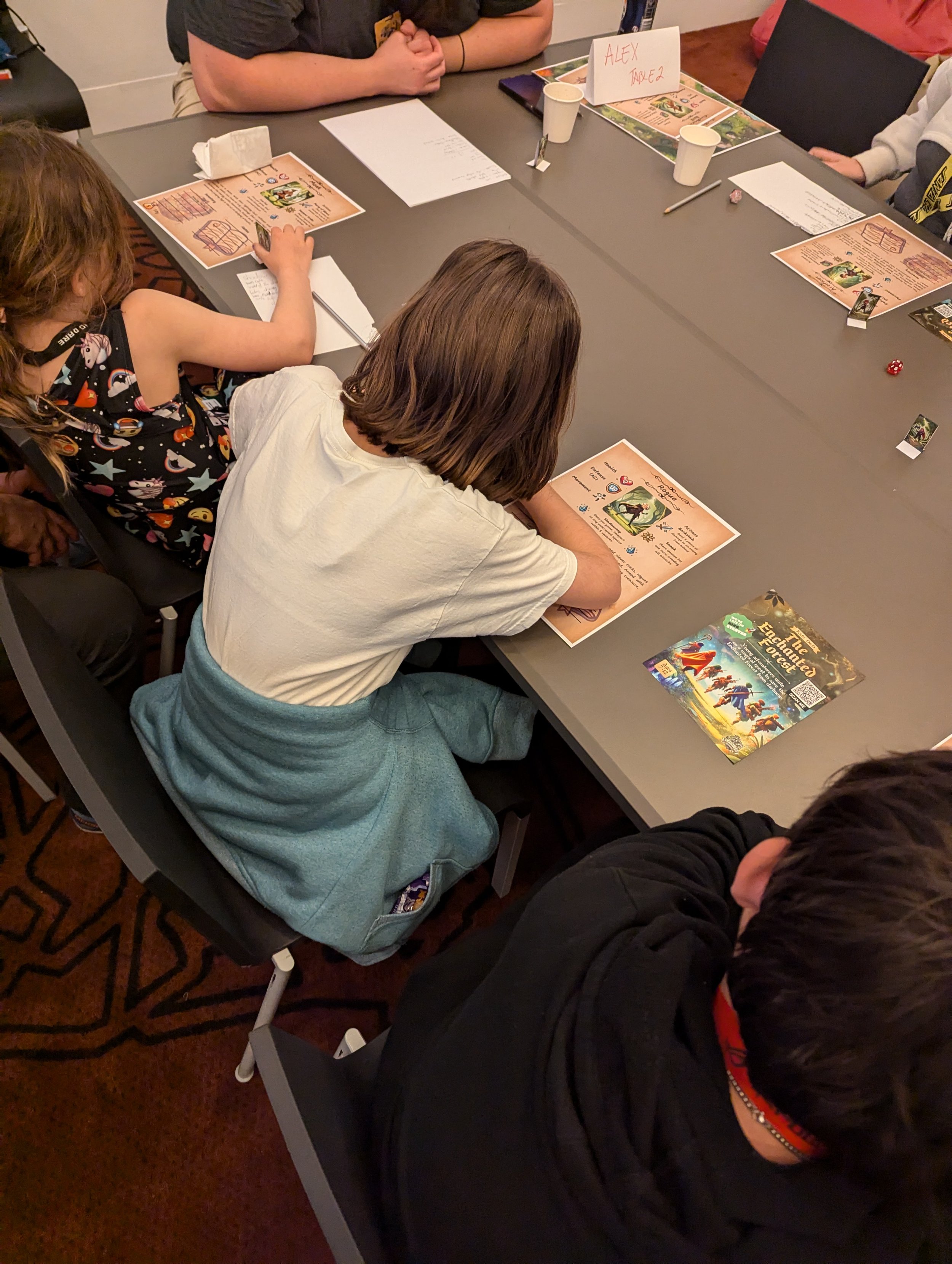
What Does a Dungeon Master Actually Do?
The DM has one job: they hold the world.
That sounds grand, but in practice it means:
You describe what the characters can see, hear, and sense in each scene
You play the role of any character who isn't a player's hero (the shopkeeper, the villain, the mysterious stranger at the inn)
You decide what happens when players take actions, based on the rules in the adventure
You keep the energy moving and make sure everyone gets a turn
You are the narrator of a collaborative story. You're not trying to defeat the players or control the story. You're trying to make the story feel alive and real, and the best way to do that is by being genuinely curious about what the players are going to do next.
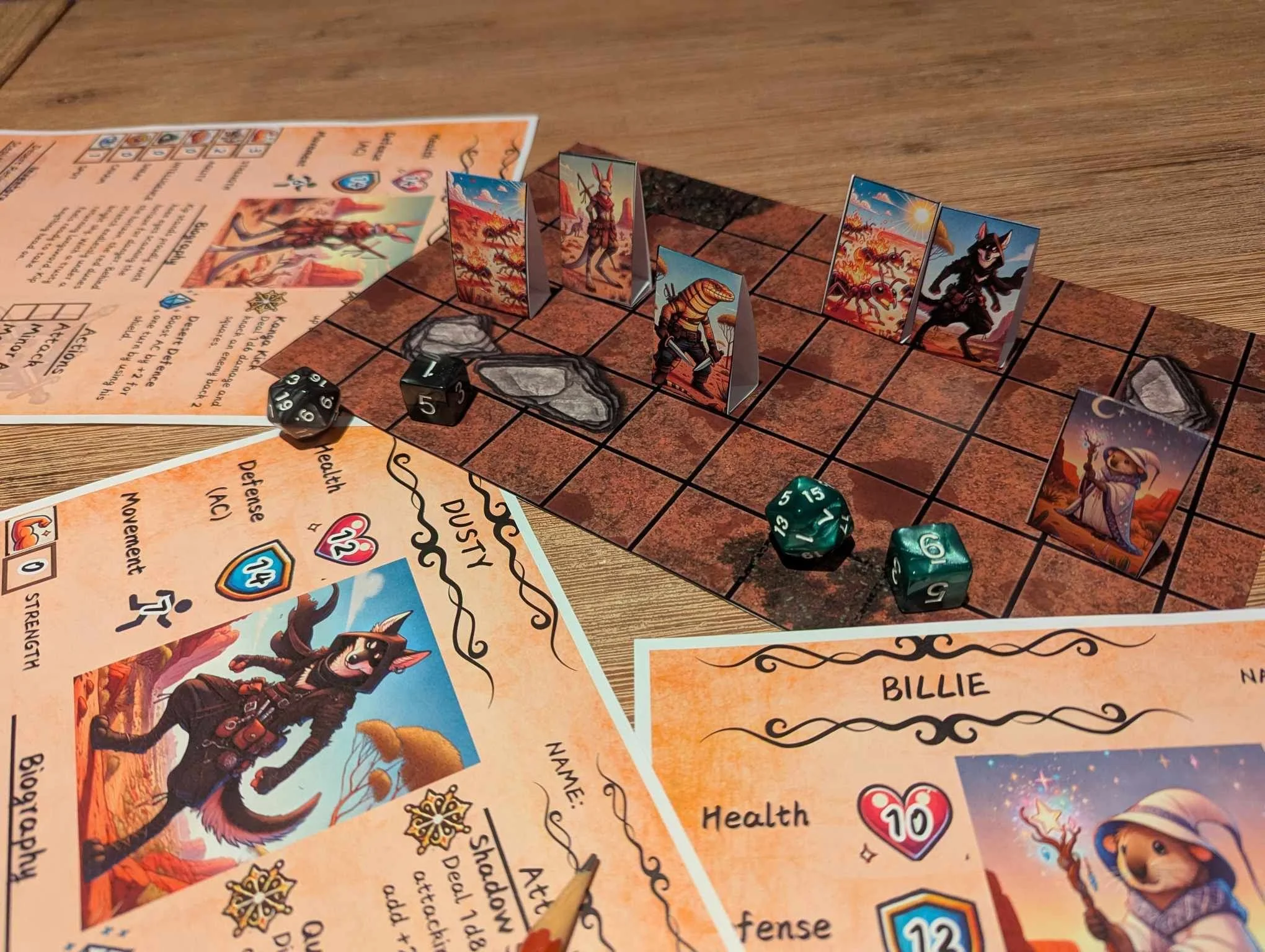
Keep things simple - Premade adventure, pre-generated character sheet and dice!
What You Don't Need to Be a DM
Let's clear these up immediately, because they're the things that stop most parents from ever trying.
You don't need to have played D&D before. The adventure tells you exactly what to do. Following written instructions is the entire skill set required for your first session.
You don't need to know every rule. There are a handful of rules that matter for a beginner game, and they fit on one page. You will learn them by playing, not by studying beforehand.
You don't need to be able to improvise. A pre-written adventure handles the plot, the scenes, the encounters, and the outcomes. Your job is to run what's already there, not to invent something new on the spot.
You don't need to do voices. Enthusiastic DMs do character voices. Plenty of legendary DMs don't. A different speaking pace or tone for different characters is more than enough — and optional.
You don't need to be perfect. There is no "wrong" way to run a first session. If you miss a rule, make something up and keep going. If a player does something unexpected and you don't know what happens next, roll a die and describe the result. The story continues either way.
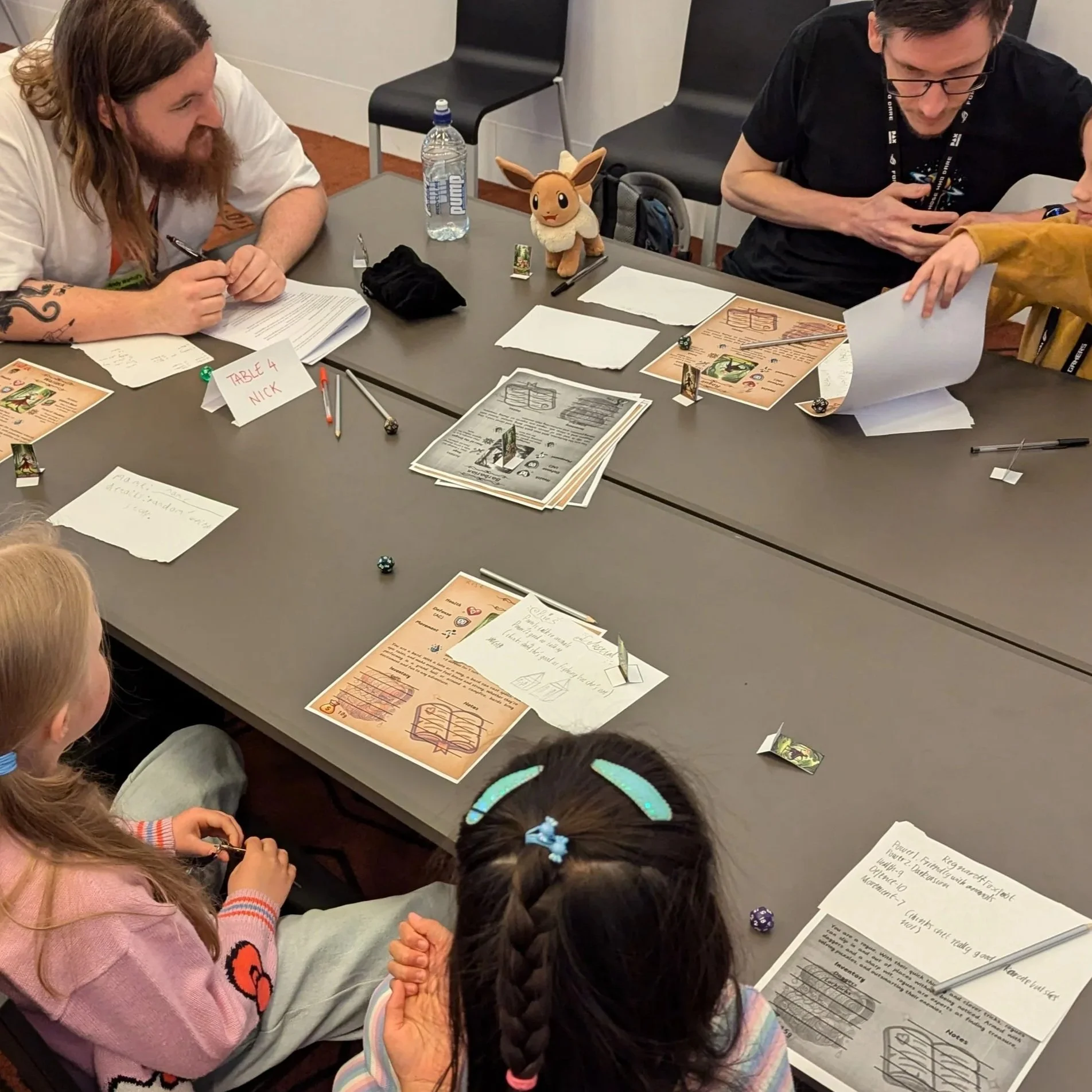
Snippet from our adventure The Beast of the Hollow Caves
Setting Up Your First Session
Step 1 — Choose your adventure
Pick a pre-written adventure suited to your players' age group and your own comfort level. Beginner-friendly adventures have everything you need built in: clear scene descriptions, DM tips, creature stats, and outcome guides. You are reading from a script, not writing one.
Step 2 — Prep your characters
Pre-generated characters mean nobody needs to build a character from scratch in session one. Lay them out and let each player choose one they're drawn to. They only need to know their character's name, their three actions, and their Health number. Everything else can be learned in play.
Step 3 — Read the opening out loud
Read the first scene exactly as written. Don't paraphrase, don't try to make it more dramatic than it already is. Just read it clearly and look around the table when you're done.
Step 4 — Ask the question
"What do you do?"
This is the most important sentence in the entire game. Ask it and wait. Let your players think. Whatever they answer is exactly right — because there is no wrong answer.
Step 5 — Follow the adventure
The adventure tells you what happens based on the choices your players make. Read the relevant section, describe the result, and move into the next scene. If the players do something entirely unexpected, use the simple rule: if it sounds possible and fun, let them roll a die and describe the outcome based on whether they roll high or low.
Repeat until the session ends.
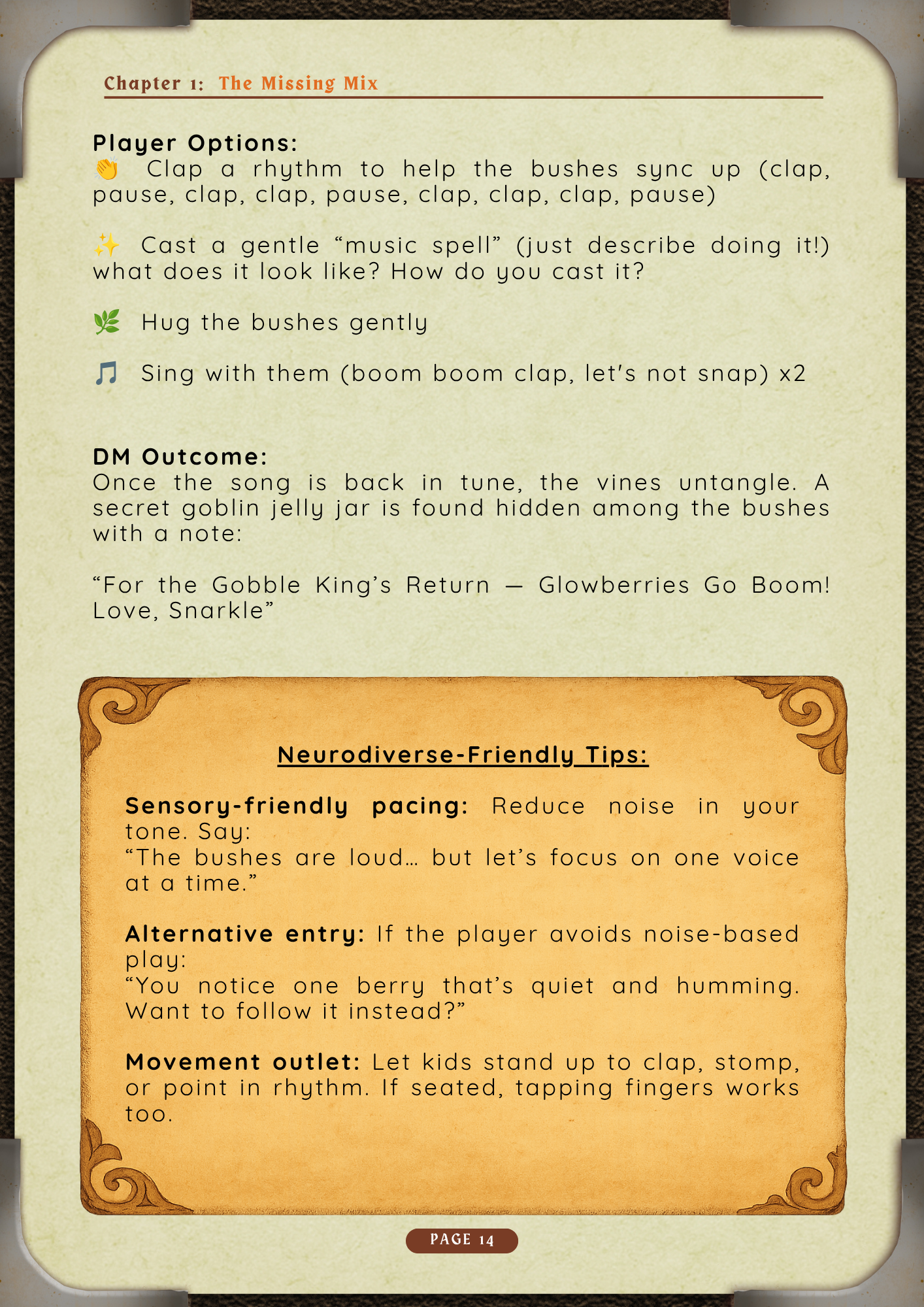
A segment from our adventure The Great Pie Thief which is full of alternative options to help shy kids
The One Rule That Fixes Everything
When something unexpected happens and you have no idea what to do, use this rule:
Ask for a roll. High means it works. Low means it works with a twist, or it doesn't work quite like they planned.
That rule — used generously and with creativity — handles almost every situation that a pre-written adventure doesn't cover. And the beautiful thing about using it is that it puts the story in the hands of chance, which means nobody can blame you for the outcome.
Your First Session Will Feel Slightly Chaotic, and That's Correct
Expect at least one player to go completely off-script in the first ten minutes. Expect someone to try something you didn't anticipate. Expect questions you don't have answers to.
All of this is normal. All of it is part of what makes the game feel alive. The chaos is not a sign that you're doing it wrong. It's a sign that your players are engaged — they're trying things, pushing the story, seeing what the world will allow.
Your job isn't to control the chaos. Your job is to respond to it with a "yes, and" or a die roll, and keep the story moving.

After the First Session
Once your first session is done — even if it was imperfect, even if the players went wildly off course, even if you forgot a rule or had to stop and re-read a section — you will find yourself wanting to do it again.
Most first-time DMs say the same thing: it was far less intimidating than I thought, and the moment the players started making choices, I forgot to be nervous.
That moment arrives quickly. You just have to start.
Where to next…
Every Cavalier Adventures pack is written so that a first-time DM can open it, skim the intro page, and run the first scene inside thirty minutes. The DM tips are built directly into every page so you're never left wondering what to do next. Browse our adventure packs here — or take our 2-minute quiz to find the right starting adventure for your family.
