
What I learned running a kids’ D&D adventure at PAX Australia
For quiet, anxious, or introverted children, tabletop roleplay offers something most activities don't — a safe character to speak through while they build real confidence.
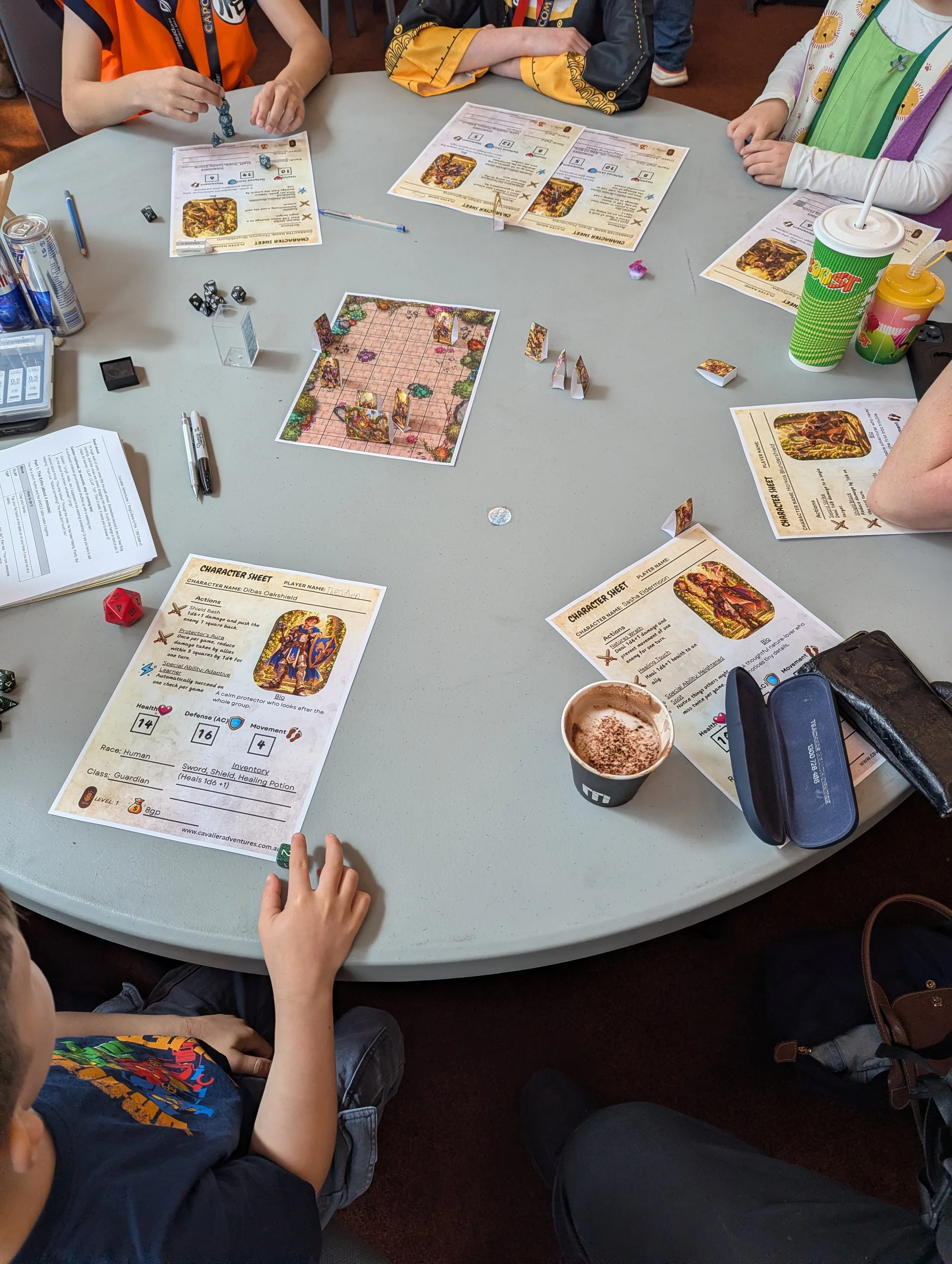
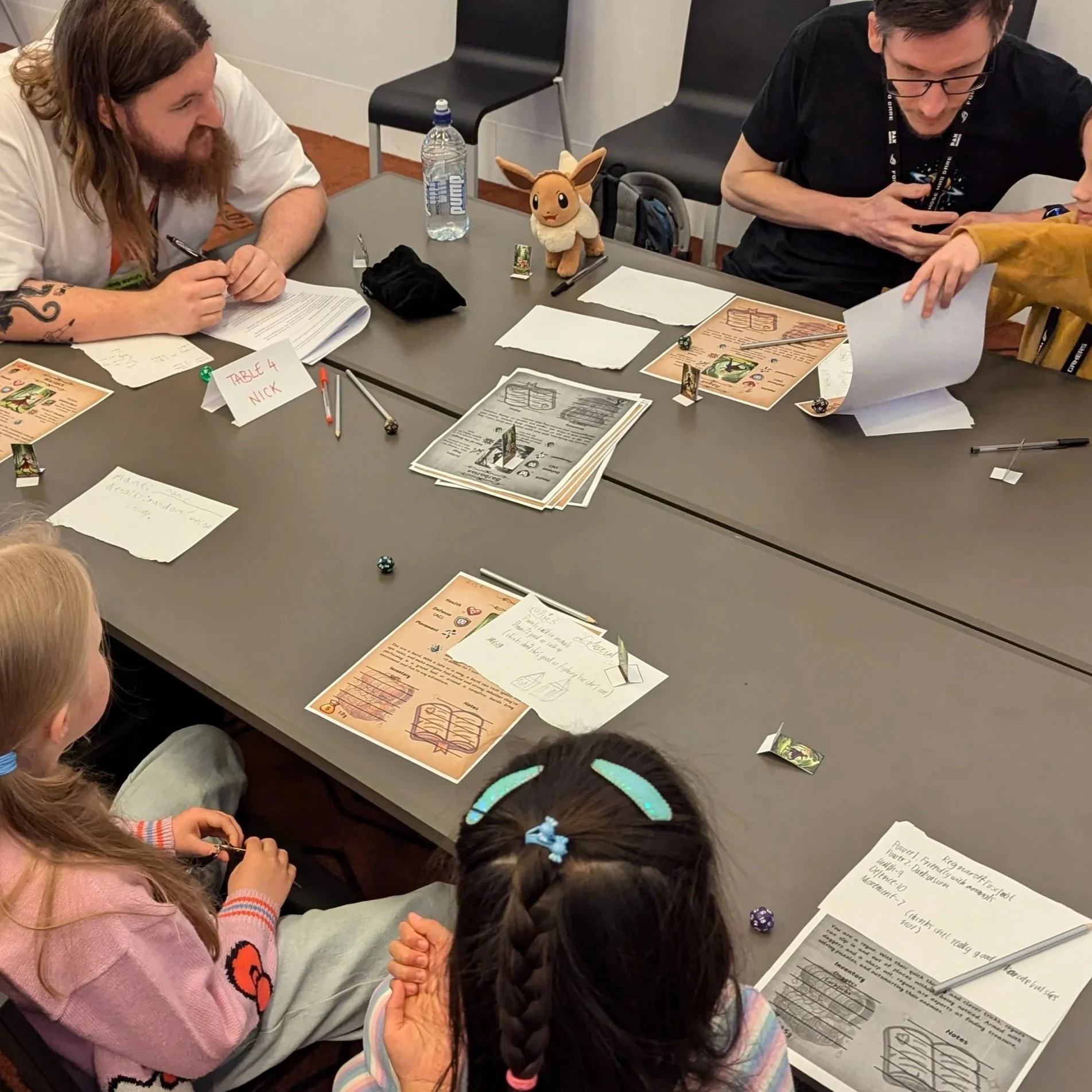
This month I sat down at PAX Australia with a stack of printed heroes, a haunted mansion and a table of kids, and I was nervous…
Plenty of them had never played a roleplaying game before. I’ve done it dozens of times but I’ll be honest, its always a mixed bag when it comes to kids!
A convention floor is loud, there’s a lot competing for a kid’s attention, and nobody owes you five minutes of it…. It went better than I expected.
What we played
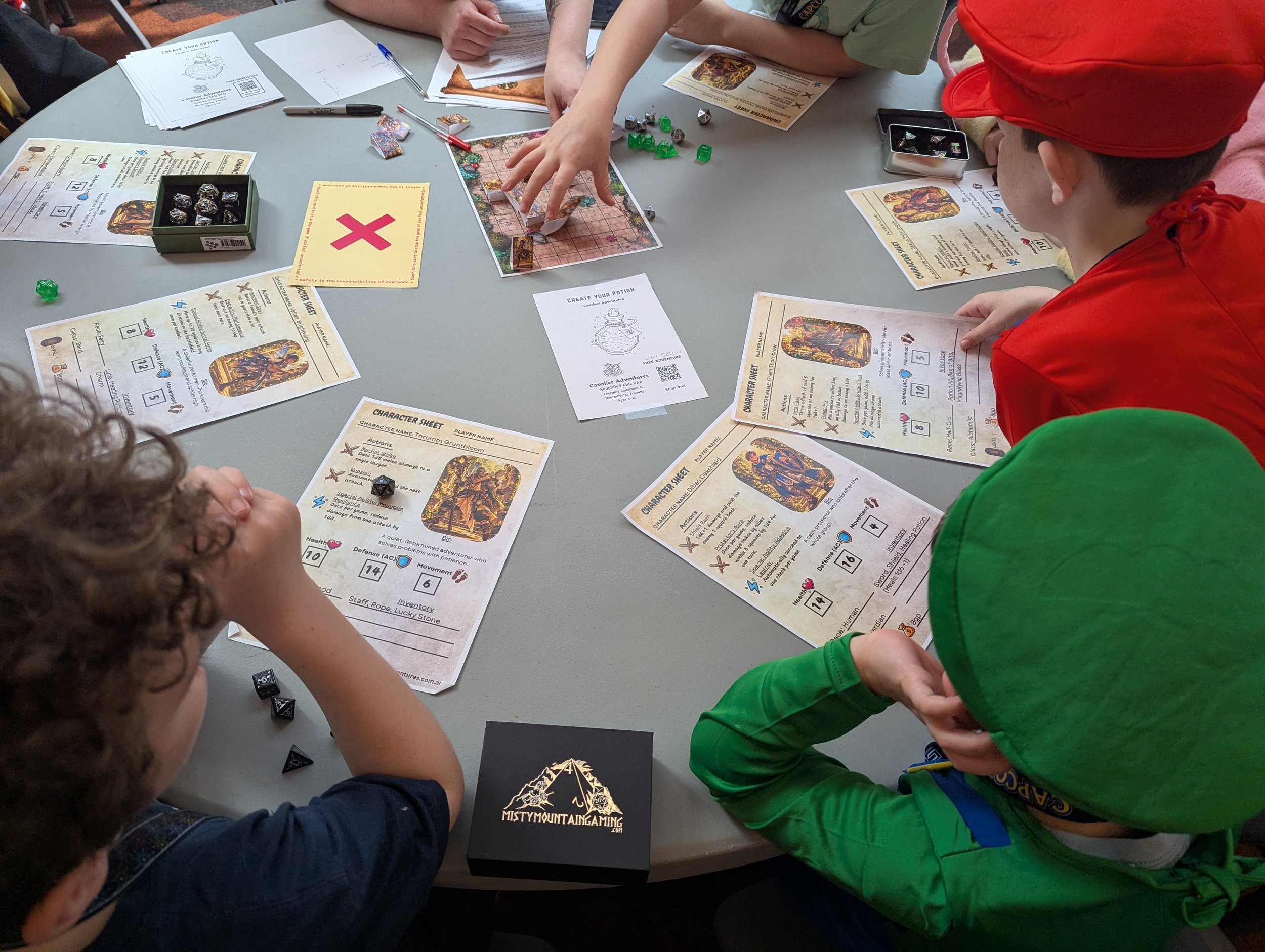
The adventure was Krog’s Bone to Pick. Mr Bones, the skeleton butler at Whitlock Manor, has lost his arm bone, and he’s sure Krog, the manor’s patchwork pet, has taken it.
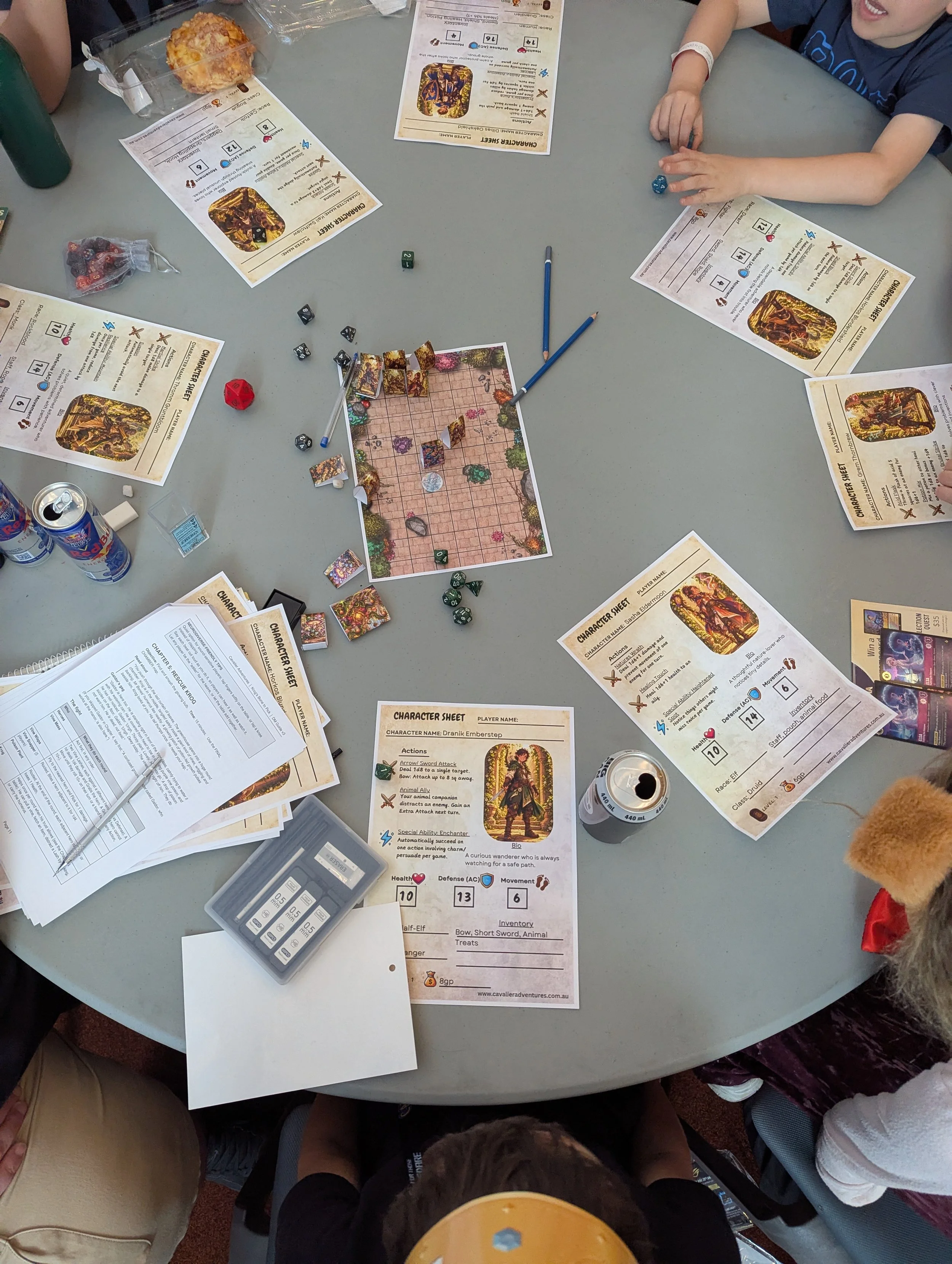
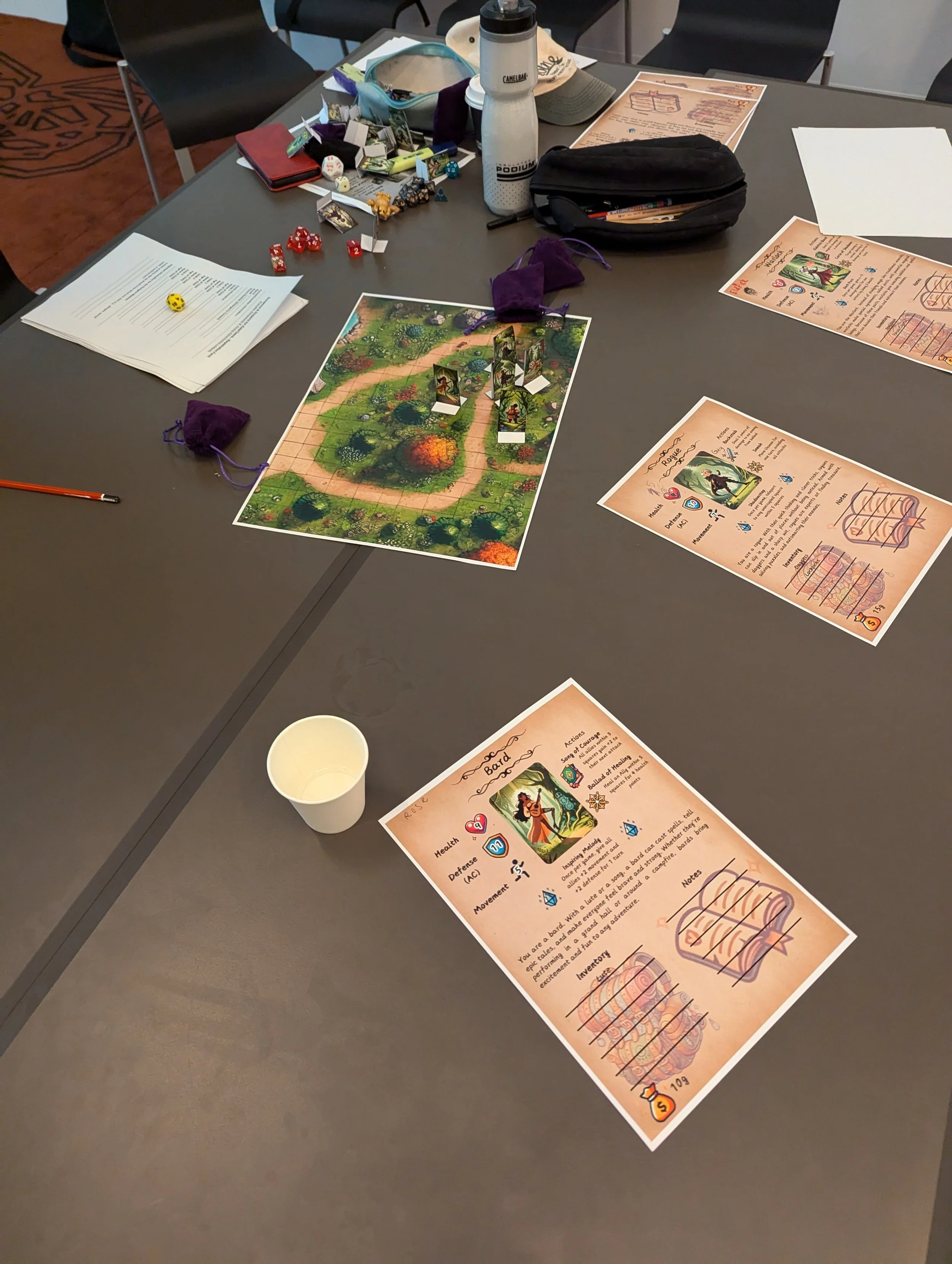
Each table had five players, and they picked from nine ready-made heroes. All up it ran about an hour to an hour and a half, including the intro, a quick warm-up and a certificate at the end.
How I wrote the rules
I gave my DM”s the exact instructions on how I design the games myself. I asked them to read the shaded box out loud, asked them to ask the players which hero they preferred, and handed over a set of dice.
Roll a 10 or more and it works. Roll a 15 or more and it works brilliantly. That’s most of what a brand new player needs. We worked out the rest as we went.
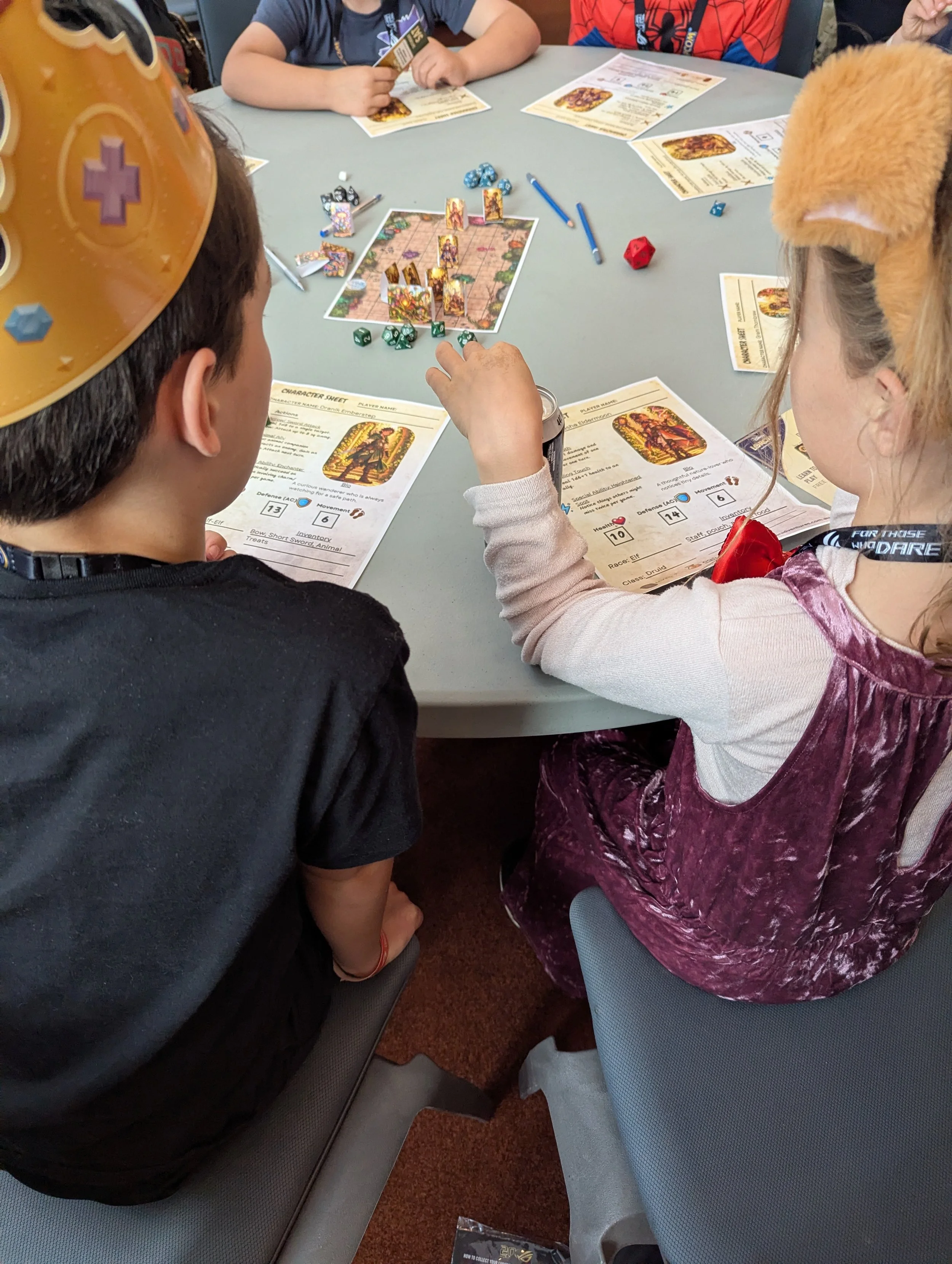
Keep things simple - Premade adventure, pre-generated character sheet and dice!
What the kids remembered
A few things stood out.
The Echo Vine. Everyone claps and taps together, and it got every table moving. Even the shy kids joined in.
Helping a friend back up. In our games a knocked-out hero isn’t out of the game, because a friend can help them back on their feet. I didn’t plan that to be a highlight, but it was the moment that seemed to stick.
Galdor and the poison plant. Watching Galdor the brainless zombie water the poison plant got some of the biggest laughs of the day, mostly from the parents standing behind the table.
THE FINALE!? The combined team dice roll where everyone had to roll the d20 to get a combined score to save the puppy from the vines!
Snippet from our adventure The Beast of the Hollow Caves
The thing I didn’t expect
Most people walking past had no idea what Cavalier Adventures makes - SIMPLIFIED ZERO PREPARATION GAMES FOR KIDS!!
It’s a book you open, read out loud and play. No prep. No D&D experience needed.
That has changed how I talk about what I do, and I’m looking at printed copies so more families can pick one up and play.
Want to try it at home?
The free one, The Chest That Bites Back, is a complete one-shot for ages 7 to 12. It takes about an hour and needs no prep. FREE ADVENTURE
Krog’s Bone to Pick, the haunted-mansion story we ran at PAX, is our Halloween adventure. PATREON LINK
Not sure which one suits your kids? The 2-minute quiz will point you to one. QUIZ
Thanks to everyone who stopped by, and to the parents who let their kids sit down with a handful of dice and a skeleton butler.
Harry
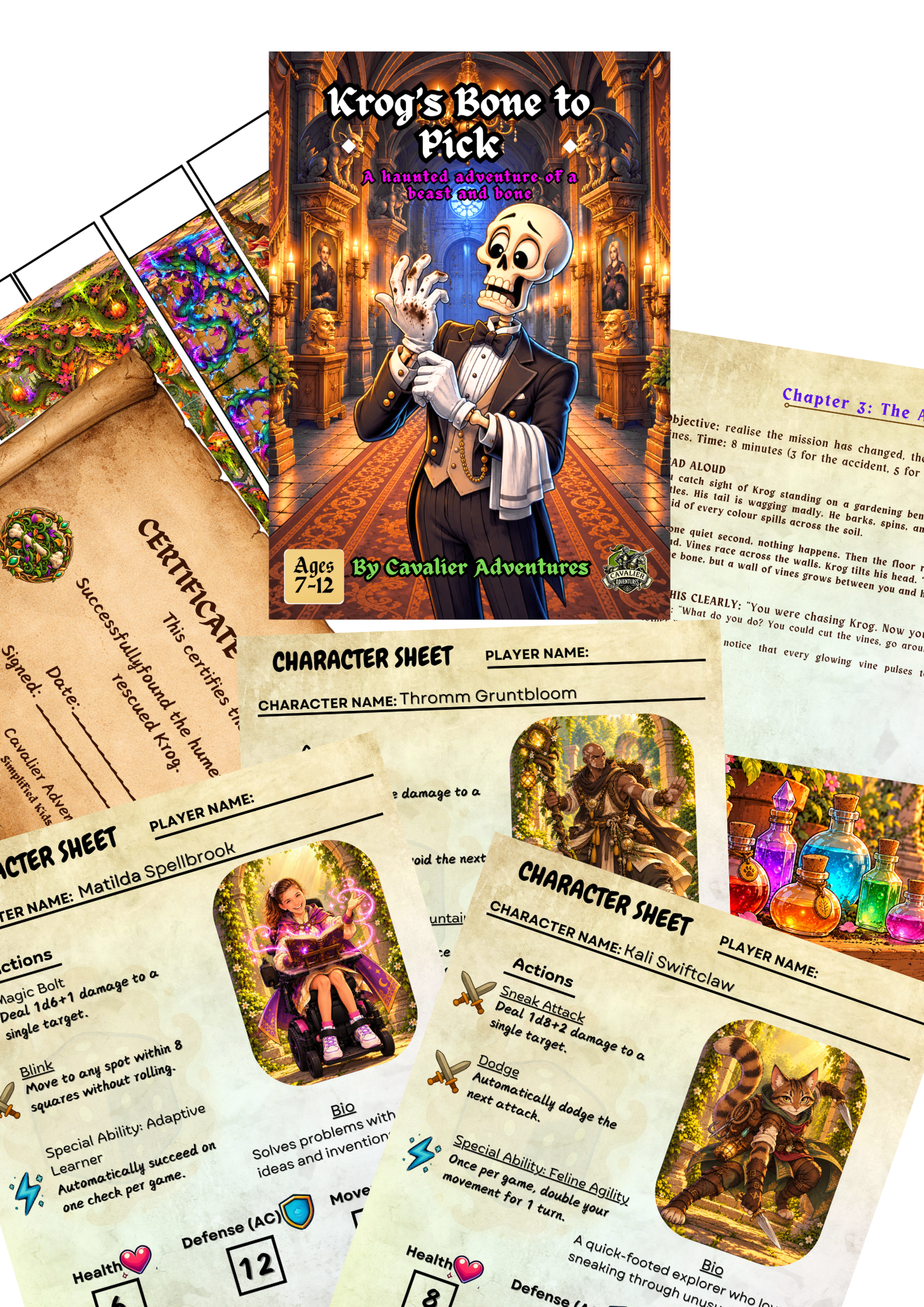
A tiny snipped from our adventure Krog’s bone to Pick which is full of easy rules and simple guides for parents.
This Is Not Therapy. It's Play. And That's Why It Works.
Nobody is asking your child to talk about their feelings. There's no structured exercise in identifying emotional states. There's no circle time.
There's just a story, some characters, and a group of people deciding together what happens next.
The confidence builds because the child was too busy having fun to notice it building. That's not a side effect of good game design — it's a direct result of it.
Where to next…
Every Cavalier Adventures pack is built with neurodiverse-friendly design as standard — clear choices, structured turns, visual prompts on character sheets, and adventures that give quieter kids natural moments to step forward and lead. Browse our adventure packs and find the right starting point for your child.
How to Be a Dungeon Master With Zero Experience: A First-Timer's Guide
Never run a tabletop RPG before? Here's a complete, simple guide to becoming a Dungeon Master for your kids — no experience, no stress, no rulebook required.
The words "Dungeon Master" make it sound like a job that requires years of training. It doesn't. Here's the truth about what it actually involves.
You've probably seen a DM in a YouTube video or a TV show — confident, dramatic, spinning elaborate plots on the spot while players hang on every word. That version is real. It's also the version that comes after ten years of doing this every weekend.
The beginner version — the version that lets you run your first session for your kids tonight — looks completely different. It involves reading sentences from a pre-written adventure, asking "what do you want to do?", and rolling a die when the story calls for it.
If you can do those three things, you can be a Dungeon Master.
This guide will walk you through everything you actually need to know, without the parts that don't matter yet.
What Does a Dungeon Master Actually Do?
The DM has one job: they hold the world.
That sounds grand, but in practice it means:
You describe what the characters can see, hear, and sense in each scene
You play the role of any character who isn't a player's hero (the shopkeeper, the villain, the mysterious stranger at the inn)
You decide what happens when players take actions, based on the rules in the adventure
You keep the energy moving and make sure everyone gets a turn
You are the narrator of a collaborative story. You're not trying to defeat the players or control the story. You're trying to make the story feel alive and real, and the best way to do that is by being genuinely curious about what the players are going to do next.
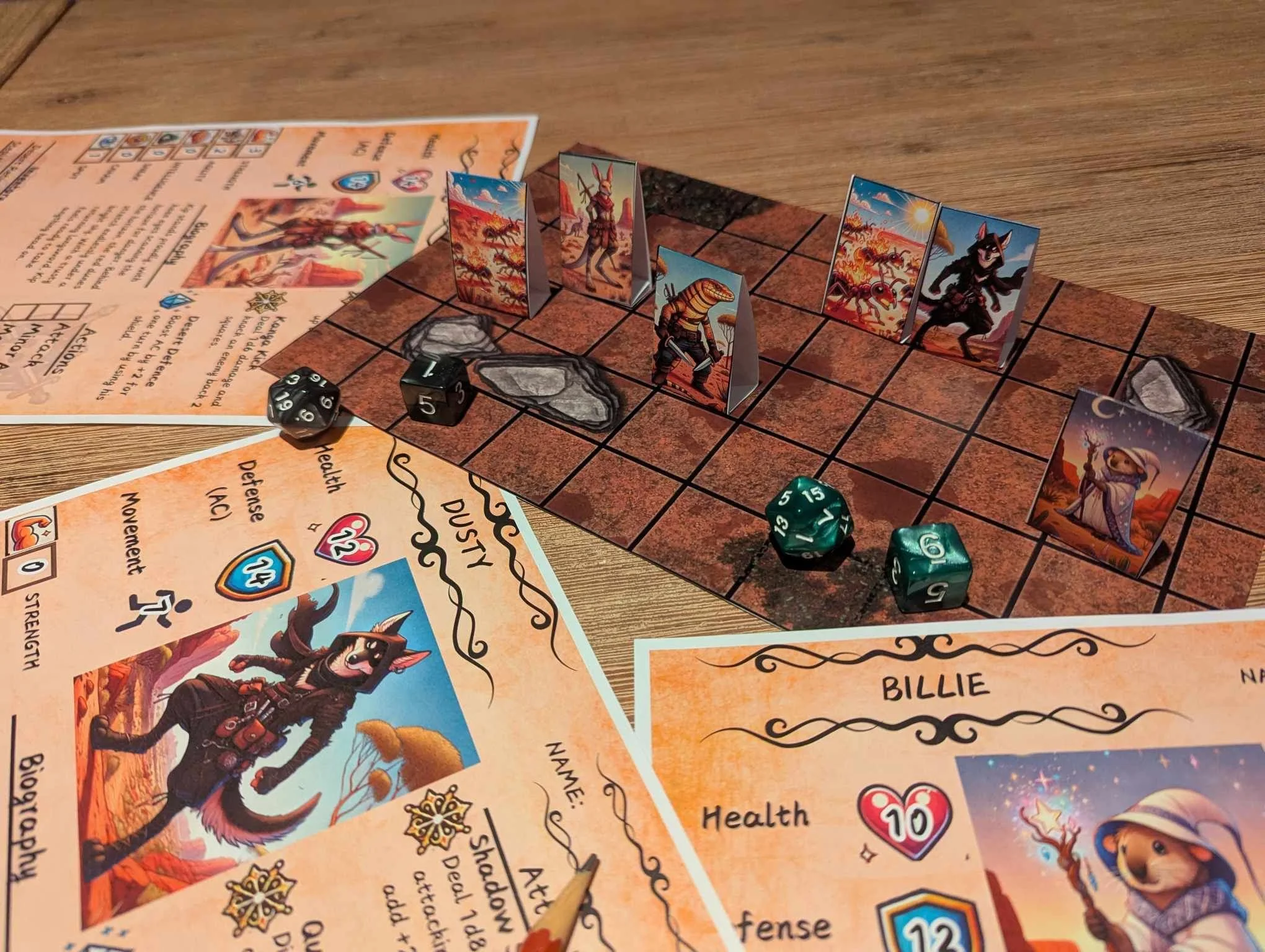
Keep things simple - Premade adventure, pre-generated character sheet and dice!
What You Don't Need to Be a DM
Let's clear these up immediately, because they're the things that stop most parents from ever trying.
You don't need to have played D&D before. The adventure tells you exactly what to do. Following written instructions is the entire skill set required for your first session.
You don't need to know every rule. There are a handful of rules that matter for a beginner game, and they fit on one page. You will learn them by playing, not by studying beforehand.
You don't need to be able to improvise. A pre-written adventure handles the plot, the scenes, the encounters, and the outcomes. Your job is to run what's already there, not to invent something new on the spot.
You don't need to do voices. Enthusiastic DMs do character voices. Plenty of legendary DMs don't. A different speaking pace or tone for different characters is more than enough — and optional.
You don't need to be perfect. There is no "wrong" way to run a first session. If you miss a rule, make something up and keep going. If a player does something unexpected and you don't know what happens next, roll a die and describe the result. The story continues either way.
Snippet from our adventure The Beast of the Hollow Caves
Setting Up Your First Session
Step 1 — Choose your adventure
Pick a pre-written adventure suited to your players' age group and your own comfort level. Beginner-friendly adventures have everything you need built in: clear scene descriptions, DM tips, creature stats, and outcome guides. You are reading from a script, not writing one.
Step 2 — Prep your characters
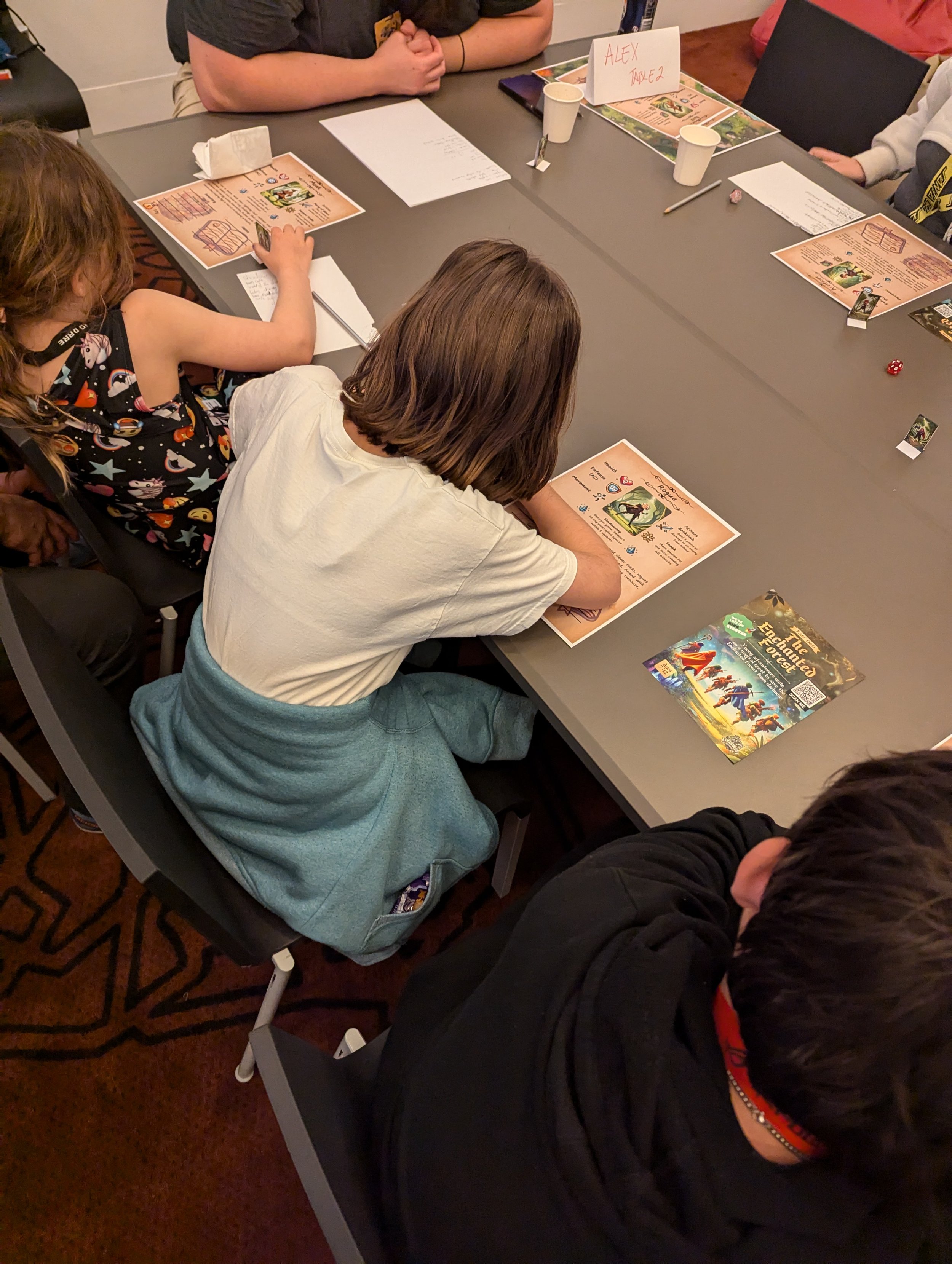
Pre-generated characters mean nobody needs to build a character from scratch in session one. Lay them out and let each player choose one they're drawn to. They only need to know their character's name, their three actions, and their Health number. Everything else can be learned in play.
Step 3 — Read the opening out loud
Read the first scene exactly as written. Don't paraphrase, don't try to make it more dramatic than it already is. Just read it clearly and look around the table when you're done.
Step 4 — Ask the question
"What do you do?"
This is the most important sentence in the entire game. Ask it and wait. Let your players think. Whatever they answer is exactly right — because there is no wrong answer.
Step 5 — Follow the adventure
The adventure tells you what happens based on the choices your players make. Read the relevant section, describe the result, and move into the next scene. If the players do something entirely unexpected, use the simple rule: if it sounds possible and fun, let them roll a die and describe the outcome based on whether they roll high or low.
Repeat until the session ends.
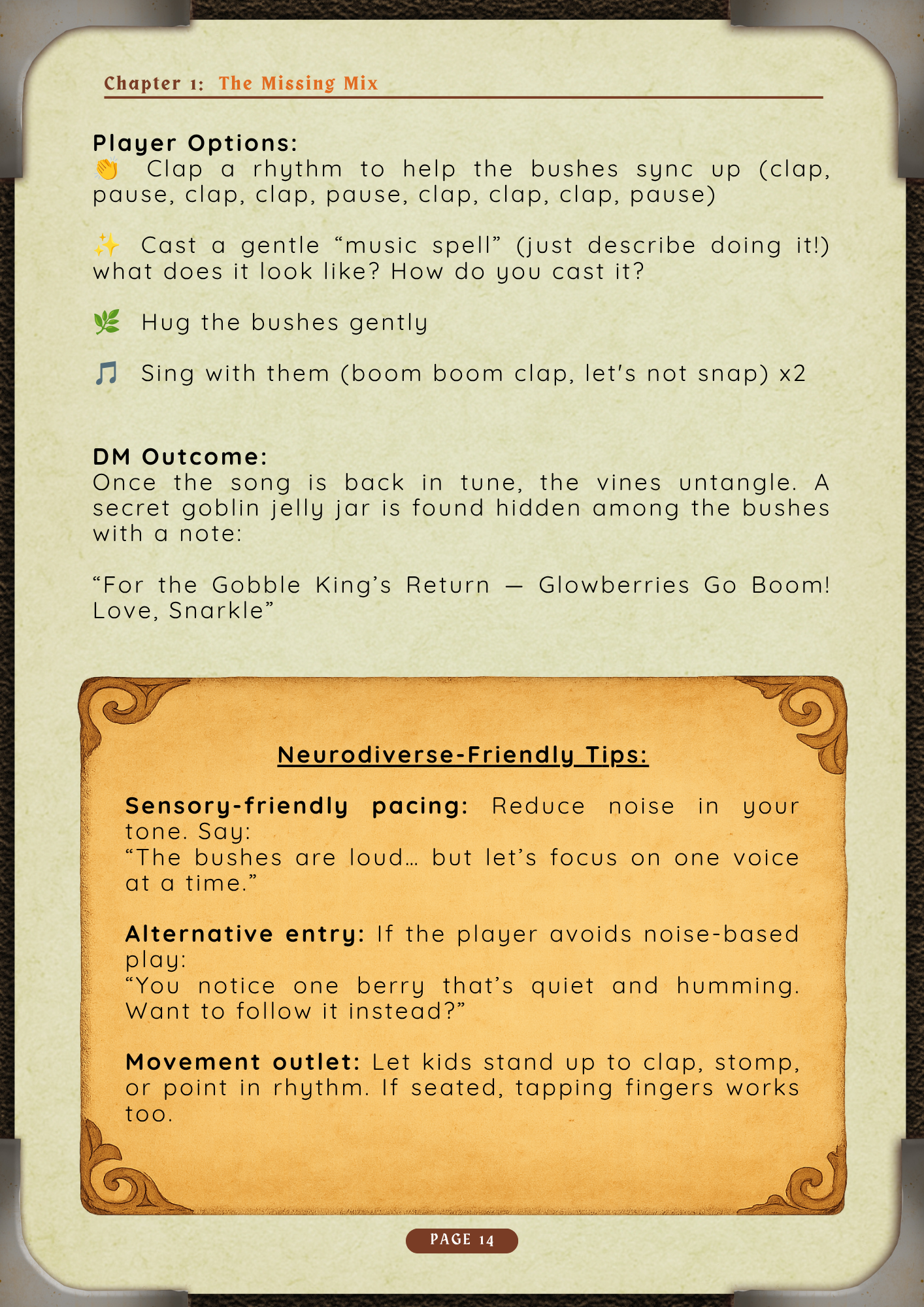
A segment from our adventure The Great Pie Thief which is full of alternative options to help shy kids
The One Rule That Fixes Everything
When something unexpected happens and you have no idea what to do, use this rule:
Ask for a roll. High means it works. Low means it works with a twist, or it doesn't work quite like they planned.
That rule — used generously and with creativity — handles almost every situation that a pre-written adventure doesn't cover. And the beautiful thing about using it is that it puts the story in the hands of chance, which means nobody can blame you for the outcome.
Your First Session Will Feel Slightly Chaotic, and That's Correct
Expect at least one player to go completely off-script in the first ten minutes. Expect someone to try something you didn't anticipate. Expect questions you don't have answers to.
All of this is normal. All of it is part of what makes the game feel alive. The chaos is not a sign that you're doing it wrong. It's a sign that your players are engaged — they're trying things, pushing the story, seeing what the world will allow.
Your job isn't to control the chaos. Your job is to respond to it with a "yes, and" or a die roll, and keep the story moving.
After the First Session
Once your first session is done — even if it was imperfect, even if the players went wildly off course, even if you forgot a rule or had to stop and re-read a section — you will find yourself wanting to do it again.
Most first-time DMs say the same thing: it was far less intimidating than I thought, and the moment the players started making choices, I forgot to be nervous.
That moment arrives quickly. You just have to start.
Where to next…
Every Cavalier Adventures pack is written so that a first-time DM can open it, skim the intro page, and run the first scene inside thirty minutes. The DM tips are built directly into every page so you're never left wondering what to do next. Browse our adventure packs here — or take our 2-minute quiz to find the right starting adventure for your family.

How to Play D&D with Kids: A Beginner's Guide for Parents Who Have Never Rolled a Dice
A simple, no-experience-needed guide to playing D&D with your kids at home — what you need, how to start, and why it's easier than you think.
Ok so where do you start with so much information out there…It’s much simpler than you think.
You don't need to know the rules. You don't need a rulebook. You don't even need dice.
You just need ten minutes and a willingness to say "yes, let's try this."
If you've heard about Dungeons & Dragons and wondered whether your family could actually play it together, the answer is yes — and it's far simpler than most people think.

Why Parents Hesitate (And Why It's Unfounded)
Most parents picture D&D as a 300-page rulebook, hours of prep, and a level of game-mastering skill they don't have. That version of D&D exists — but it's not the only version, and it's definitely not the one built for families.
The version that works for kids strips away the complexity and keeps the part that actually matters: a story, a few choices, and some dice rolls to see what happens next.
What You Actually Need to Get Started
A simple, pre-written adventure (not the full adult rulebook)
Pre-made characters so nobody has to build one from scratch
A six-sided or twenty-sided die — or a free online dice roller
About 20–30 minutes
A willingness to read a sentence aloud and let your kid decide what happens next
That's the entire list. Everything else is optional.

Keep things simple - Premade adventure, pre-generated character sheet, dice (or online dice roller) and adaptability to the fun creativity of kids!
How a Session Actually Works
You read a short scene aloud. "You walk into a clearing and see a locked chest." That's it — that's the whole skill required.
Your kid decides what their character does. Open it? Look for traps? Walk away?
You roll a die to see how it goes. Higher numbers mean better outcomes.
You describe what happens next, based on the roll.
Repeat that loop for 20 minutes and you've run your first session.

Snippet from our adventure The Beast of the Hollow Caves
Why This Is Worth Doing
Research on tabletop role-playing has moved away from outdated fears about the hobby and toward a strengths-based view — studies now describe how this kind of play builds imagination, strategic thinking, empathy, and the ability to form and sustain friendships. That's not marketing language — that's where the actual research has landed over the past decade. ScienceDirect
For a parent, the more useful version of that sentence is: this is one of the only "screen-free" activities your kid will ask to do again.
You Don't Have to Build This Yourself
This is exactly the gap we built Cavalier Adventures to fill. Every adventure pack comes with the story already written, the characters already made, and beginner-friendly prompts so you're never guessing what to say next.

Kids love problem-solving and getting creative through games - make sure to get an adventure and start having fun!
So, where to next…
If you want to try this tonight without writing a single thing yourself, our Beginner RPG Starter Pack is built for exactly this moment — zero prep, pre-made characters, and a story that's ready to read aloud.
OR, still not sure where to start? Take our 2-minute quiz and we'll point you to the right adventure for your child's age.
Final Thoughts
The best DnD adventure for kids is one that actually gets played.
Simple beats complex.
Short beats overwhelming.
Have fun with it and roll the dice if in doubt.
You want to do that….roll the dice and lets see!
Start small. Build confidence. Then expand.
If you want a full system that handles everything for you, start with the Beginner RPG Starter Pack.


Best DnD Adventures for Kids (Ages 8–12) – Ready to Print and Play
If you’re trying to find a DnD adventure for kids that actually works, most options fall short.
Too complex.
Too much prep.
Too long.
You want something simple. Something you can run tonight.
This guide breaks down the best DnD-style adventures for kids aged 8–12 that are ready to print and play.
What Makes a Good DnD Adventure for Kids?
Before choosing, look for these:
Clear instructions
Short play sessions
Minimal setup
Pre-generated characters
Structured progression
Optional learning elements
If it takes you 30 minutes just to understand it, it’s not built for beginners.

1. Beginner RPG Starter Pack (Best Overall)
If you want a complete system that teaches kids how to play step-by-step, this is the strongest option.
This isn’t just one adventure. It’s a full progression.
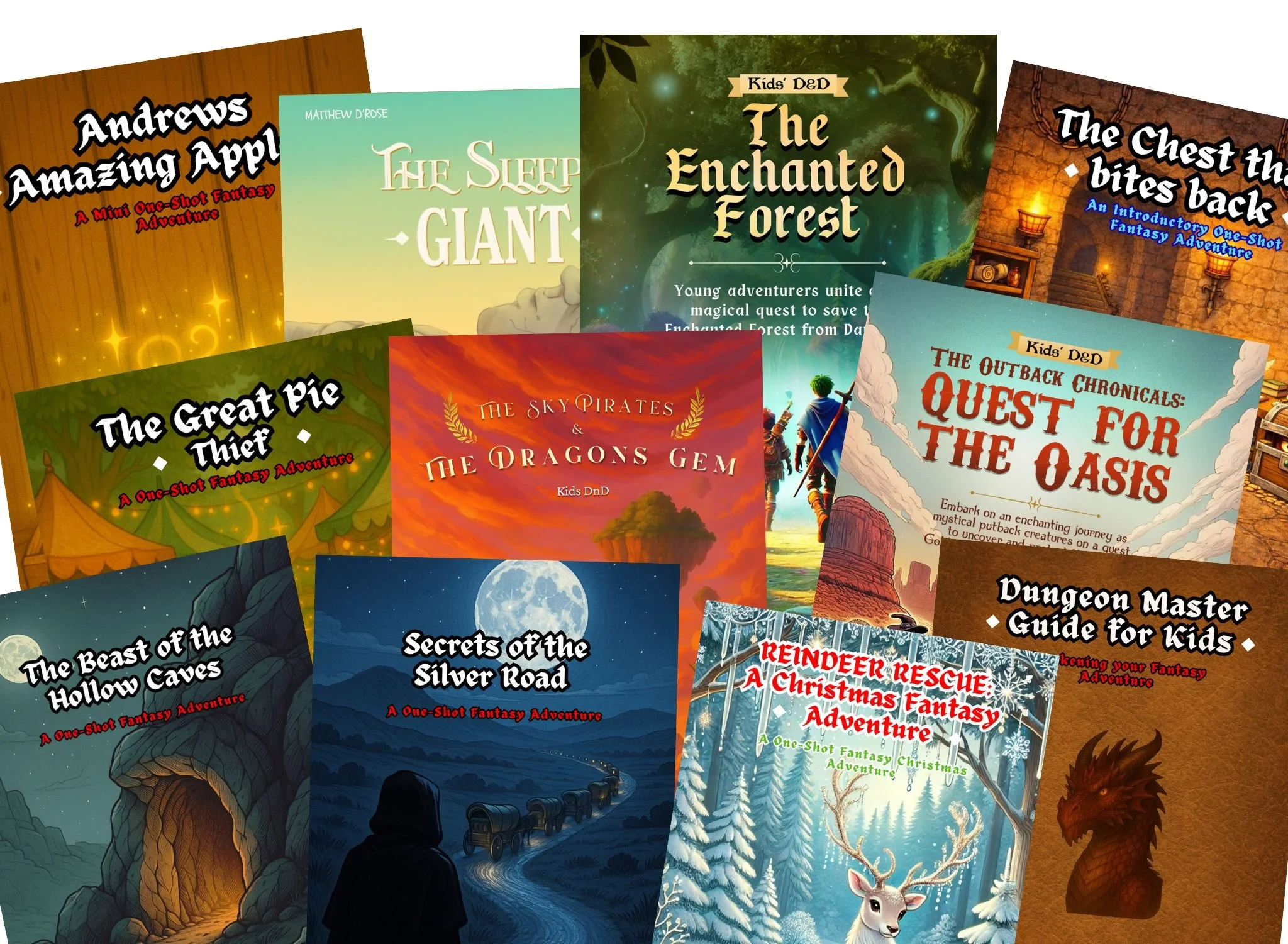
You start simple with Andrew’s Amazing Apples, Then the Cavalier Trials, then finish with The Enchanted Forest!
You build skills.
You end with a full story-driven campaign.
What you get:
5x structured adventures
30+ hours of gameplay
12+ pre-generated characters
Printable maps and creatures
Certificates and reward system
Why it works:
No experience required
No prep needed
Designed for ages 5-8 AND 8–12
Includes neurodiverse-friendly options
This is the best entry point if your child has never played before.

2. The Enchanted Forest (Best First Campaign)
If your child is ready for a longer story, this is a strong next step.
It introduces:
exploration
simple combat
character decision-making
The structure is clear and easy to follow, even for first-time Dungeon Masters.

3. Andrew’s Amazing Apples (Best Quick Start)
If you want something fast:
This is a short, simple adventure that can be played in a single session.
Use this if:
you’re testing interest
you want a low-pressure first game
you have limited time
want a simple game and only like to use a six sided dice. (d6)

4. 15-Minute Adventure Packs (Best for Busy Families)
Short sessions.
No prep.
Easy to run.
These are ideal for:
weeknights
after school
quick classroom activities
Each one is designed to be picked up and played immediately.

How to Choose the Right One
Start here:
Complete beginner → Starter Pack
Some experience → Enchanted Forest
Short session → 15-minute adventures
Don’t overcomplicate it.
Pick one and start.
Final Thoughts
The best DnD adventure for kids is one that actually gets played.
Simple beats complex.
Short beats overwhelming.
Start small. Build confidence. Then expand.
If you want a full system that handles everything for you, start with the Beginner RPG Starter Pack.

Ready to Play: Why Our 15-Minute D&D Adventures for Kids Are Worth Your Time
When I first started creating tabletop adventures for kids, I assumed the hardest part would be the storytelling. What I quickly discovered was something much, much bigger.
Parents, teachers, and caregivers want kids to play more, not video games, but games where they can learn more! They want imagination sparked, not bogged down. They want joy, not logistics. So that’s what I set out to build. I honestly cannot stand seeing kids on Ipads all the time.
Well, last month, we launched our 15-minute adventure series on Patreon — short, complete encounters designed to be opened, read and played in the same afternoon. And here’s why that matters.
1. Short Adventures Fit Real Life
Long campaigns are amazing — but they take time, focus and prep. Many families and classrooms simply don’t have that. A 15-minute adventure means:
• You can play after dinner
• You can run one in homeroom or a club
• You don’t need hours of prep
This makes D&D accessible to busy parents, teachers with packed schedules, and kids with shorter attention spans. It’s tabletop gaming built for actual families.
2. Designed for New Players
Each adventure comes with one pre-generated character, one creature encounter, and one objective — all written in a way that doesn’t require you to be a D&D expert.
This removes a huge barrier for new DMs. You don’t need to know every rule — you just need to read, set the scene, and play. That means no intimidating rulebooks, no stressful prep, and no guesswork. Just get in, run an encounter and have them also learn a quick lesson!
Did I mention you don’t even need dice!? No dice, no worries! We have our own Dice Roller you can use free right here -> DICE ROLLER

3. Encourages Imagination and Choice
Even in 15 minutes, kids are making decisions:
• Where to go
• What to say
• How to solve a problem
These decisions are real agency — not just following instructions. This style of play builds confidence, imagination and problem-solving skills.
It’s not about winning or losing; it’s about choosing, thinking and experiencing a story together.
4. A Tool, Not a Test
One of the most common concerns I hear is “Will they learn anything?”
Here’s the twist: they do — without realising it.
Each adventure now includes optional prompts that gently encourage:
• Critical thinking
• Teamwork
• Creative storytelling
• Simple maths and observation
These are optional — so you can keep it play-focused, or use them as conversation starters if you want an educational layer.
5. Built for Parents and Teachers
Some creators focus only on players. But to make these adventures genuinely useful, I built them for the people running them — you.
That means:
• Clear read-aloud text
• Simple objectives
• Beginner DM tips
• One-page summaries
• Printable character cards
This isn’t just a game — it’s a tool you can actually use and kids love it! Short, sharp and to the point.
PLUS: I’ve also added a Badge which they unlock once they complete each adventure too! Nothing better than rewarding good problem solving and critical thinking!

6. Each Month Is a New Story
With Patreon, every month brings a brand new adventure tuned for ease, fun, and variety.
You don’t just get a PDF — you get:
• New settings
• New themes
• New characters
• Something fresh to play
And because each one is short, you never feel like it’s a commitment — you feel like it’s play.
If you’ve ever wanted to introduce tabletop roleplaying games to your kids, students, or youth groups without frustration and stress, this is really the way forward. You open the file, you set the scene, and you play. That’s it.
And the best part? You don’t need to be an expert — you just need to have a few minutes.
SO GRAB THE FIRST MONTH FREE AND SEE WHAT YOU THINK!